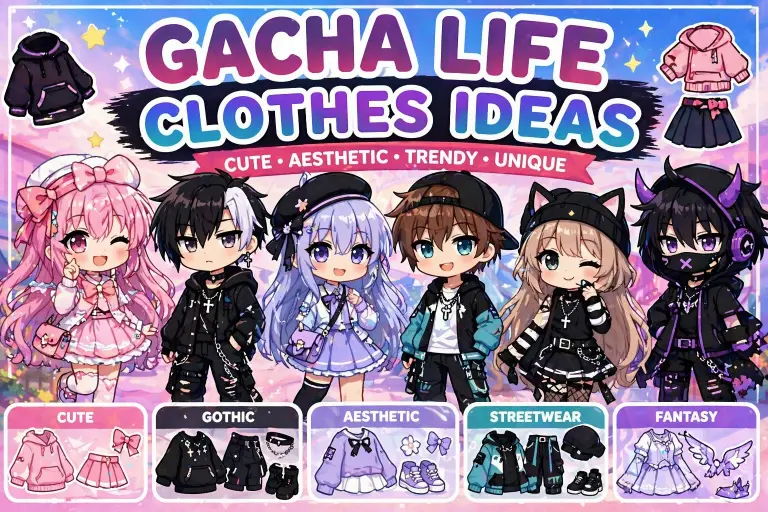
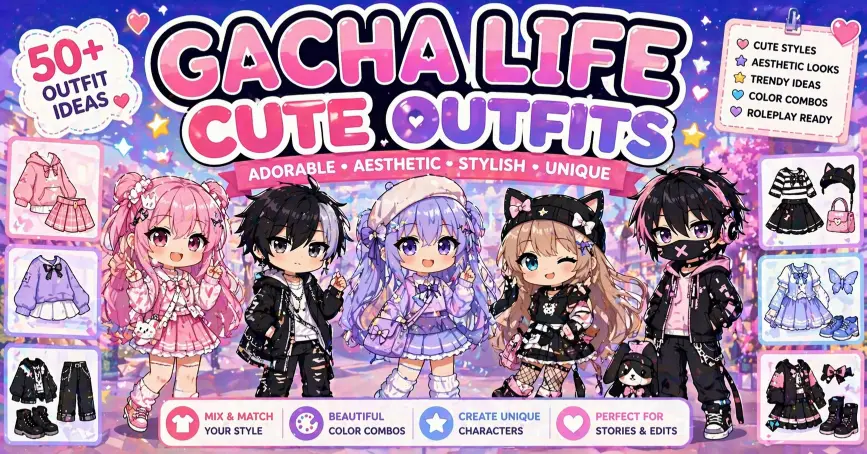
Gacha Life Cute Outfits: Ideas That Actually Look Designed
You’ve been in the character studio for twenty minutes and your Gacha Life cute outfits still look somehow… wrong. The colors aren’t quite working, the accessories feel random, and the whole character ends up looking like every other default design you’ve seen. That gap between what you’re making and what you see other players sharing isn’t about unlocking secret items — it’s about knowing a few things the game doesn’t tell you. This piece covers outfit ideas by aesthetic, color rules that hold a design together, how to use accessories without overdoing them, and the habits that quietly make characters look unpolished.
Why the Gacha Life Customization System Rewards Intentional Choices
Gacha Life, developed by Lunime, gives you a character studio that goes considerably deeper than most mobile dress-up games. You’re not just picking a top and bottoms and moving on. The system layers clothing items, lets you stack overlay pieces, offers separate slots for hair, ear, face, neck, wrist, and held accessories, and lets you adjust eye shape, skin tone, and hair color independently from everything else. That flexibility is what makes polished characters possible — and exactly what makes cluttered ones so common.
Most players open the wardrobe and pick whatever looks interesting in the moment. Nothing wrong with that for experimenting, but it’s why so many designs end up visually noisy. When you decide on an aesthetic before you touch a single item, every choice has a reference point. You stop guessing.
Building Gacha Life Cute Outfits Around a Clear Aesthetic
This is where character design actually starts. Anchor your build to one recognizable aesthetic and let it guide every decision — from the main clothing down to shoe color and hair accessories.
Soft Girl is the most consistently popular aesthetic in the Gacha Life community. It uses blush pinks, creamy whites, warm beiges, and pastel lavender. Puff-sleeve tops, ruffled skirts, small hair clips, and pastel bags fit naturally here. Keep the palette to three colors maximum, and the result reads as cohesive before anyone processes the individual items.
Dark Academia translates well because the game has enough blazer-style tops, plaid textures, and deep earth tones to build it properly. Charcoal, forest green, burgundy, and cream layered together create the right mood. Round glasses and neutral shoes pull it into territory that feels deliberately styled rather than just dark for its own sake.
Y2K is deliberately louder. Butterfly clips, chunky platforms, crop tops, and color pairings that shouldn’t work — hot pink with silver, lime green with black. This aesthetic actually forgives more item mixing because controlled chaos is part of the point.
Cottagecore works best when you lean into Gacha Life’s warmer palette: dusty rose, sage green, warm white, and honey yellow. Flowy tops, floral patterns, and nature-adjacent accessories like flower crowns or leaf motifs tie the look together without overcomplicating it.
Pick one and commit before you select a single item. Switching aesthetics halfway through a design is the fastest way to end up with a character that looks like they got dressed in a hurry.
The Accessories That Make Gacha Life Cute Outfits Actually Work
Accessories in the game are layered across multiple slots — hair, ears, face, neck, wrists, and held items. The most common mistake is filling every slot because the slots exist. That’s not accessorizing. That’s cluttering.
Three accessory points work for any clean or minimal aesthetic. Five is the ceiling for busy, maximalist styles like Y2K. Beyond that, no individual piece reads clearly — they just compete with each other and cancel out.
Some combinations that consistently land:
- Hair clips and a bag from the same color family, letting them echo without matching exactly
- A single statement necklace with nothing competing at the ear level
- Bold glasses paired with a clean face — skip the blush stickers if the frames are doing the work
- A held item (book, phone, wand) that fits the aesthetic’s story, not just one that looks impressive by itself
Shoes and wrist accessories get ignored more than any other slot, but they carry real visual weight. Dark outfits with white shoes create an immediate contrast that lifts the whole design. Pastels with pastel-matching shoes read as one unified piece rather than separate decisions stacked on top of each other.
Color Rules Worth Knowing Before You Open the Wardrobe
You don’t need formal color theory knowledge — just three principles that apply directly to how Gacha Life characters are built.
The 60-30-10 rule is the most practical one here. Sixty percent of your character’s visual space goes to a dominant color, thirty to a secondary, and ten to an accent detail. In practice: dominant color on the main clothing, secondary on hair or accessories, accent in one small piece like a bag or clip. When you follow this, the design has a clear hierarchy, and your eye knows where to go.
Temperature consistency is the second principle. Warm tones — reds, oranges, yellows, warm browns — work together naturally. Cool tones — blues, purples, greys, cool greens — do the same. You can mix warm and cool intentionally, but if a character looks “off” and you can’t identify why, temperature mismatch is almost always the reason.
Contrast intentionality is the third. Strong contrast — light skin with dark clothing, dark skin with saturated bright colors — always looks deliberate and clean. Weak contrast blurs the character into itself. Neither approach is wrong, but one needs to be a choice you made, not something that happened by default.
Design Habits That Are Holding Your Characters Back
A few patterns come up consistently in designs that don’t quite reach where they should.
Matching hair and outfit color exactly flattens the whole design. Your character becomes a single uniform block, and nothing draws the eye anywhere specific. Even a slight contrast — one shade of difference between hair and clothing — creates the visual separation that makes a design feel finished.
Over-accessorizing is the second issue, and it compounds fast. The third is background compatibility, which most players only think about after the fact. White outfits disappear against light backgrounds. Dark designs vanish in storm or night scenes. If you’re building characters for scenes or sharing thumbnails, the outfit has to work against the specific background you plan to use — not just look good in the studio with a white preview behind it.
Finally, preset outfits aren’t a design dead end. The most visually interesting characters in the community are usually built by taking a preset and modifying it piece by piece with a specific aesthetic in mind. That iterative approach — starting with structure and refining toward a vision — is what separates characters that look intentionally designed from ones that look untouched.